
Movement Stopped my Chronic Pain blog by Wendy Welpton.
“Walking was something I always enjoyed. But I didn’t realise how important it would become. Or how powerful it can be to help you keep going through tough times”
I’ve always been an active person. Going to the gym religiously. So, I’m lucky that I’ve always made the connection between movement and feeling good mentally and physically. However, particularly before having children in my thirties, I was certainly a ‘sedentary athlete’. Sitting at a desk for eight hours. Then hitting the gym for an hour or more a few times a week. Seeing it as ticking the ‘exercise’ box, and only ever walking on weekends or holidays, but far from regularly.
Having three boys in five years from the age of thirty, I found far less time for the gym. That’s when I started running, doing the Run for Life initally. Then local 10k races and eventually a half-marathon in 2014, with the dream of a full marathon at some point.
I enjoyed occasional family walks but running was my go-to. It made me feel alive and looking back I now realise I really was addicted. I ran further and kept pushing myself, despite strong signals that my body was not as happy as my brain. Often experiencing hip and lower back pain that physiotherapists couldn’t solve. Although they’d help to keep me going for a while. I just pushed on, until one night in December 2014. The day I’d completed a beautiful winter’s 10k run around Oxford. I woke up to horrendous pain in my lower back and down both legs. And all of a sudden I couldn’t walk.

Assuming I would be fixed in a few months, I then endured four years of chronic pain. I had to find people to help me and felt like a fraud as I hadn’t had an ‘accident’. Basically, what I now know as my hypermobile body had just decided enough was enough. I had put too large an impact on an unstable, badly aligned body.
I was so shocked by what was happening to me. Scared that I would never be out of pain again. I felt eighty at forty! The frustration of not being able to run was almost worse than the pain. I didn’t realise how much long-term pain can affect your mind, your energy and your view of life. I struggled with my mental health regularly. It wasn’t until I surrendered my frustration and accepted that running wasn’t good for my body. Then started to learn about why the body experiences chronic pain. And going on to work to undo the poor movement patterns that were creating it. That I started to see improvements in my pain.
I didn’t see walking as a real form of ‘exercise’. It wasn’t hard enough. Plus the fact I didn’t get the runners ‘high’ or distance anymore. Meaning that by comparison it just wasn’t something I could fit in time to do. Part of the issue was my previous focus on a few exercise sessions. Instead of looking at how I moved (or didn’t) all the time. Analysing the shapes I was making with my body. Which I now know to be as important, if not more so, than the quota of exercise we are ‘supposed’ to do each week.
I’m a determined person. So, decided to learn as much as I could about why my body was not doing what it should do. Through talking to people who were helping me, I took a deep dive into the work of Katy Bowman (@nutritiousmovement). It was all about bio-mechanics, alignment and movement which led me to do an Anatomy & Physiology qualification. Katy is also a huge advocate of the benefits of walking, both physically, mentally & socially.
I found a neuro-muscular therapist who helped me to re-programme my body. Almost as though I was a developing child, who made sense to me and my pain started to reduce. From there, I started to be capable of doing more. Playing with my children again after having to say no for years for fear of massive flare ups. And it was Katy Bowman’s work that made me switch my thinking from focussing on a few short bouts of exercise a week. To understanding that how you move your body all day long is what really shapes your tissues. Learning how regular daily movement, walking, and the technique of those movements was key for long-term wellness.
Anger was a normal feeling for me when I thought about what had happened. But I am grateful to have achieved a deeper understanding of how to use my body. And realised that I wanted to share what I’d learned on my journey and educate people. Helping them avoid what I went through or to be inspired to just move more and move well.
Katy held a workshop and I was lucky enough to meet her there. She pointed me in the direction of MovNat, a programme for learning and coaching natural movement. I signed up for the certification and was immediately hooked. The principles of working on our movement from the ground up, just as I had done with my therapist, rang true. The understanding that to function efficiently. Our bodies need to be trained in the movements we are designed to perform every day. But also practising the whole range of our natural movement skills. Aiming for an equalised skill-set for all-round physical capability.
Walking became something that I realised was key for my mental health. I now post regularly about walking and natural movements. Those you add into a walk. To inspire people to get out, even if it’s just for five minutes. And particularly in winter, to help them feel better. I love the social aspect of walking. And now walk more efficiently through learning good techniques. The realisation that the connection with nature, finding joy in the changes we see around us, and being fully present, are significant factors in my recovery. I walk almost every day in different ways. It’s the most ‘natural’ movement there is after all!
I now coach natural movement to help people to get down and up again from the floor. To sit in different positions and move around on the floor. And to increase mobility and increase strength by pushing their body weight against gravity. Balance practise is also a big feature. Using safe and effective lifting techniques. And viewing walking techniques too. Transitioning over and under objects and even throwing and, for those who progress, even up to jumping and climbing.
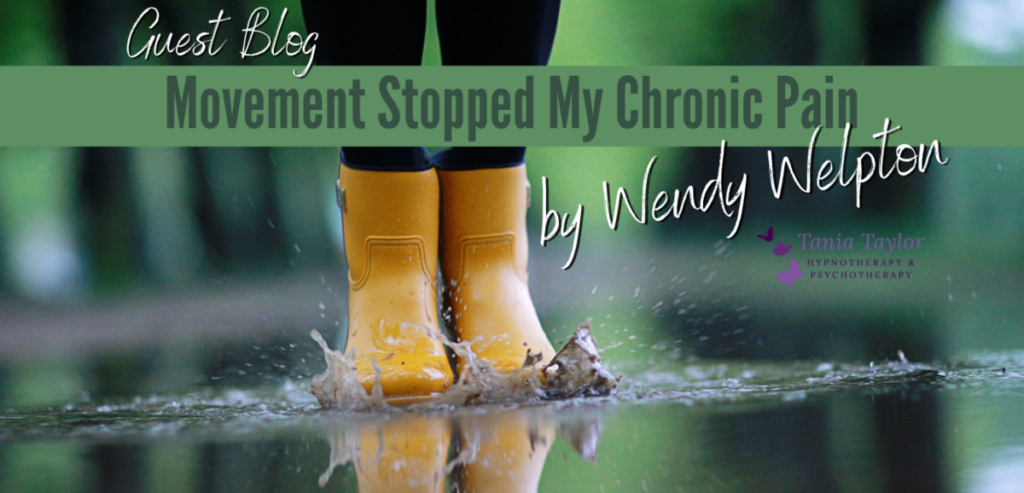
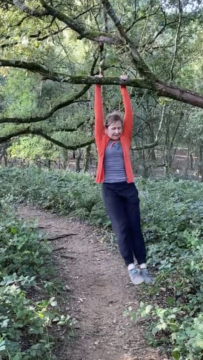
If you had told me I’d enjoy jumping in puddles and hanging from tree branches, I would never have believed you.
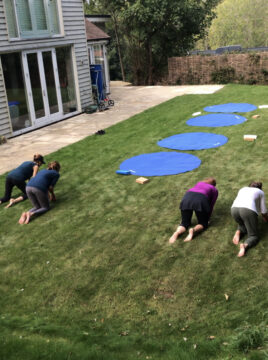
Finding natural movement made me more mobile, stronger, and most importantly, more confident to enjoy moving again. I now see my experience as a lucky wake-up call. And am passionate about helping others to find fun and enjoyment in movement. The word exercise has negative connotations for many, but ‘moving’ feels achievable and accessible. I hope to encourage people with movements that are not intimidating. And can be performed at home or whilst out walking. Movements that can be performed whilst doing other tasks, so you don’t need to find extra time.
To try to encourage people to move more and in better ways, I like to give practical and fun suggestions. Looking at how we can add in extra movements. Identifying movement breaks throughout their day. And I share this on my social media accounts @reclaim.movement. I also send a monthly newsletter with additional tips that you can sign up to on my website www.reclaimmovement.co.uk.
Live classes are something I offer too. Entry-level ground movement sessions online. Movement Stopped my Chronic Pain. I have also created an On Demand video library with lots of five and ten minute videos. They encourage you to add in small amounts of healthy movements into your day. Another way I work is by coaching you privately online and in my studio in Oxford.
Encouraging people to get out walking more is important to me. And see this as a great way to spread the natural movement message. I am in the process of starting a local walking group in 2022. This is for anyone who would like to join me and learn a few natural movement tips enroute.

It was Katy’s work that made me realise how important regular walking is. And how hugely beneficial it is for overall health. Once I started to prioritise it in my day… I realised how it still gave me many of the reasons I loved running, but had separated them from running itself. The ability to be mindful and present out in the fresh air. The varied terrains and views – connected to nature (wherever possible). I had found a nourishing and often challenging, low-impact movement. I realised how the simple act of getting out of our comfortable boxes into the great outdoors was so beneficial for both physical and mental health. It truly makes me a nicer person and I always feel so much better afterwards.
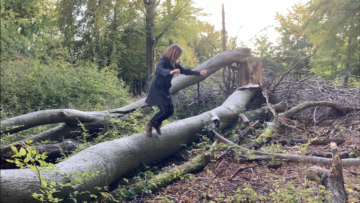
I also know how important it is to mix up movement. Movement stopped my chronic pain, so I encourage people to spot opportunities for movement wherever they are. This brings in a fun, playful side that is so key for people to want to keep moving. When I’m out on walks I balance on fallen tree trunks, climb up and over obstacles. Sometimes, I even just balance on pavement edges (sometimes backwards for an extra challenge). After all, if moving isn’t fun or making you feel good, why would you bother?
Distance and time are no longer important measures to me. Instead regularity of movement by tuning in to how I’m feeling is. I walk as often as I can. Whether it’s ten minutes around the streets in the dark evenings to shift me out of my day. Or a longer walk chatting with friends or family. And even as a way of experiencing new places both locally and when we’re away. My walking things are always ready for me to be able to just go!
I found out through my journey that I am hypermobile in many joints. So, I have to concentrate hard on strength. I still get niggles like many, however these days I respond to them and they are just that, niggles. I’ve also just hit the menopause. Which has brought its own mental health challenges due to episodes of insomnia. Walking helps me with this hugely! When I am too tired to train, walking always invigorates me and refreshes my mind. I no longer have chronic pain. And am thankful for this every single day, as the memory of how it affected me, and my family’s lives will never fade.
Wendy Welpton, 47, Oxford Natural Movement Coach & Educator
Business: Reclaim Movement (www.reclaimmovement.co.uk, Facebook and Instagram: @reclaim.movement)
How can I improve my sleep? It’s a regular question I am asked.
Having issues with sleep is something that all of us are likely to face at some point or another in our lives.
Even the worlds best sleeper will sometimes experience a night that’s not so great, which then turns into another night, and another.
But we all know just how valuable sleep is to us. We’ve been in that place where we’ve had a terrible night’s sleep and then had a rubbish day because ‘we got out of bed on the wrong side’, yes?
So, here are some top tips for helping you to sleep more soundly at night and get your sleep routine right back on track. Don’t forget though, if you don’t make any changes, then you won’t see any difference. ‘How can I improve my sleep?’ You can only expect a different outcome if you make the changes and stick to them.
Step 1:
Sometimes I ask this questions and people immediately jump to “I’ve never had a good night’s sleep ever”. Read the question carefully, I’m not asking if you have ever had a good night’s sleep.
So, my activity for you is:

