
Dementia is a term used to describe over 200 different neurocognitive conditions that affect the brain.
The most common types of dementia are;
There is often a misconception that when someone has a diagnosis of dementia, the person is no longer able to have control over their lives, or can no longer live well, or learn something new.

For some people who are experiencing living with the condition after many years, these are areas that can be particularly challenging. However, more often than not, when someone begins to develop dementia they don’t start at the end of their journey, there is a beginning and a middle too.
People living with dementia might find that they are having difficulty recalling recent memories, or sometimes find it challenging to identify the way home from a familiar route. A person may have word finding difficulties, and due to issues with spatial awareness and sight perception, some people may find coordination to be challenging.
All of these symptoms and day to day challenges can sometimes cause us to experience heightened levels of anxiety and stress, low mood, sleep disruptions and feelings of frustration or anger. This is our brains normal reaction and response to signs of perceived danger. It is our Fight / Flight / Freeze response.
Solution Focused Psychotherapy and Hypnotherapy works to help us to minimise the Fight / Flight / Freeze response. Allowing us to acknowledge the experience and feelings we rightly have, whilst supporting us to cope better with the challenges that come with a diagnosis of dementia.

As a family caregiver or supporter for someone you love who is living with dementia, you may also experience that move into the Fight / Flight / Freeze response, resulting in symptoms such as anxiety, anger and depression and difficulty sleeping.
Our Fight / Flight / Freeze response is evolutions way of protecting us from perceived danger. Although times have changed dramatically from the days of the cave men and women, our brains still have this vital mechanism to ensure our survival if we find ourselves in a position that is a perceived threat to our usual way of living.
Solution Focused Hypnotherapy can help lower a person’s levels of anxiety and anger and improve levels of low mood by taking back control of the Fight / Flight / Freeze part of our brain, also known as our Limbic System. When we take more control back from our limbic system, we encourage a part of our brain called our left pre-frontal cortex to become engaged.
I have worked with lots of people living with dementia and their supporters, who have reported feeling more able to cope with the challenges they are faced with, and increased ability to sleep at night, when sleep has been disturbed.
I have also worked with people living with dementia who are more progressed in their journey with dementia. Face to face sessions are a must for people who would like sessions and are less able to communicate as video calls can be a barrier to working together.
START is an online or face-to-face therapeutic one-to-one programme recommended by NICE guidelines to be accessible to all family caregivers of someone who is living with dementia shortly after diagnosis. Research trials have demonstrated it can significantly reduce depression and anxiety experienced by family caregivers of people living with dementia and improve quality of life. You can ask your local Memory Clinic if it is a service they provide in your area for free. Unfortunately, not all locations provide it due to the specialised training and costs involved in being able to deliver this 8-session talking therapy and support programme.
If it is not run by the NHS in your area, or there is a long waiting list, you are welcome to enquire about sessions with me in private practice. There is a cost for this service, so I would always recommend exploring free options via the NHS first.
The sessions include information on:
I have worked for over 20 years with people living with dementia and those who support the person; from the point of being worried about their memory, through to diagnosis and being able to provide information, advice and signposting; to end of life and through bereavement. Dementia has touched my life in many ways and I am passionate about helping people affected by dementia to live as well as possible, for as long as possible.
If you would like to get in touch to discuss how I might be able to support you and your family you can book in a free chat with me here.
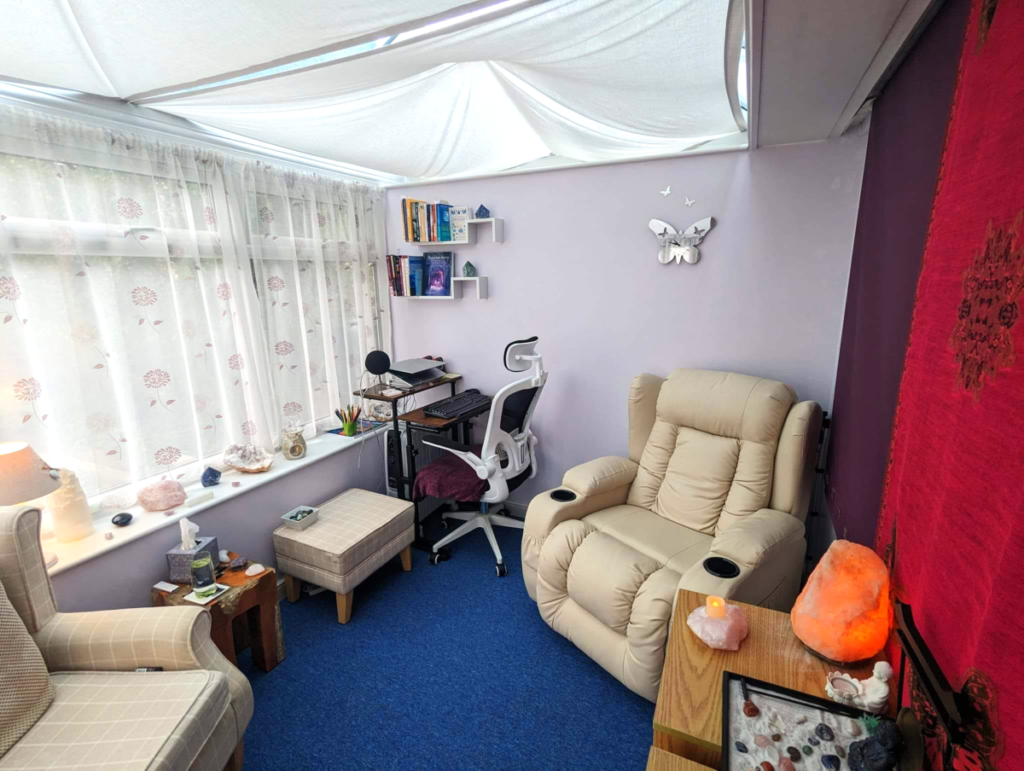
For solution focused hypnotherapy and psychotherapy to be effective, you (the person with a diagnosis of dementia) must be able to hold a conversation with me about what you would like to achieve from our working together. For example; I’d like to feel more acceptance, be calmer, sleep better, relax more, have more confidence with my diagnosis.
If this is not possible due to challenges with communication caused by the dementia, listening to hypnotherapy can still be helpful to some people. I have a number of tracks below that you can listen to completely free. My recommendation would be for you to listen at a similar time each day when you require a rest, nap, or when falling asleep at night.
I also have a free facebook group and go ‘live’ every week with a bit of information and a lovely guided hypnotherapy relaxation. It may be something you enjoy listening to alone, or with someone you know well. You can join that group by clicking here.
The Alzheimer’s Society is also a really good source of support for people diagnosed with all different types of dementia. There is a helpline, an online support forum (for you and your family), and a huge array of factsheets, information booklets, and online and face to face support groups.
Please note that hypnotherapy and psychotherapy is not a replacement for any medication your consultant or GP may prescribe for you.